
 by: Parent Project Muscular Dystrophy
As school gets underway and winter approaches, respiratory viruses like influenza (flu), RSV, and COVID-19 are more likely to spread. This year, and every year, it’s important to protect yourself, your children, and your family from respiratory infections. For individuals with Duchenne or Becker muscular dystrophy, weakened respiratory muscles can make it harder to fight off infections and may increase the risk of serious complications. Fortunately, there are several steps you and your family can take to help reduce your risk of illness!
Illness Prevention
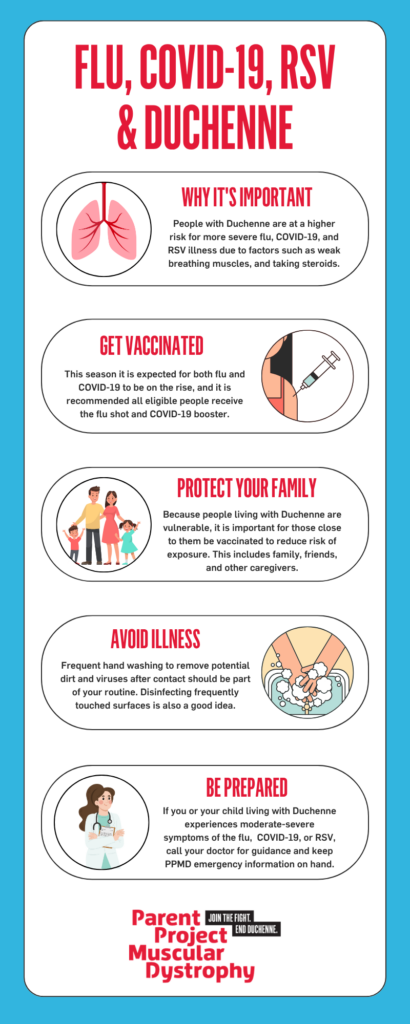
- Get vaccinated – vaccinations against influenza and COVID-19 are the best way to prevent infections from these viruses. While it cannot be 100% guaranteed, vaccination has been proven to result in fewer cases of influenza & COVID-19 and milder, shorter illness for those who do become infected with these viruses.
 Discuss your eligibility for vaccinations with your neuromuscular doctor and/or primary care provider
- Two of the FDA-approved vaccines for RSV (AVREXVY and ABRYSVO) can be administered to individuals over 18 years of age who are at higher risk of lower respiratory tract disease caused by RSV. Talk to your doctor about whether you should be vaccinated against RSV.
- Both the Center for Disease Control (CDC) and American Academy of Pediatrics (AAP) recommend that everyone 6 months and older, with rare exceptions, should get a flu vaccine every season
- For more information about current flu vaccine formulations, visit the CDC website
- Protect your family – Because people living with Duchenne & Becker are vulnerable, it is important for those close to them to be vaccinated to reduce risk of exposure. This includes family, friends and other caregivers
- Vaccinating family members can reduce your risk of becoming ill, even if you are not vaccinated yourself
- Avoid illness – Washing your hands often is the best way to stop germs from spreading! Make it a habit for the whole family to wash hands with soap and water, especially before eating, after using the bathroom, and after coming home from school or errands. Don’t forget to wipe down things that get touched a lot, like wheelchairs, phones, tablets, desks, and tables. Germs can live on these surfaces and may make it easier for someone to get sick.
- Avoid others who are sick – If you are able to avoid others who are sick, it can decrease the risk of viruses spreading to you and/or your family. If you are unable to avoid others who are sick, or if you are sick yourself, consider wearing a mask to decrease the risk of infection spread.
*Learn more about building protection and vaccines from experts here
When to Seek Medical Care
Because flu, COVID-19 and RSV have similar symptoms, it is important to seek medical care if you suspect you or your child has a viral illness.
While friends and family can be helpful resources for support, be sure to contact your primary care provider and/or neuromuscular team directly for medical advice. If you are worried about your child, do not wait to call. You can find a list of CDCC emergency numbers here.
It’s also important to be familiar with the Duchenne and Becker Emergency Care Guidelines, including oxygen precautions. Be sure to share this information with medical providers if they are unfamiliar with Duchenne or Becker. Additionally, if you/your child takes steroids, stress dosing while sick may be needed. Share the PJ Nicholoff Steroid protocol with your doctor to understand whether stress dosing is needed during illness.
Don’t forget to keep PPMD’s Safe and Unsafe Medication List on hand!
*If your child is having trouble breathing, is lethargic, has blue lips or fingernails, call 911 as this is a medical emergency.
Children’s Hospital Los Angeles Illness Comparison Chart HERE
How to manage my child’s pulmonary care when sick
Managing you/your child’s pulmonary care while sick is critically important. If you do not already have one, ask your neuromuscular provider and/or pulmonologist about creating a “sick day plan” with instructions on staying healthy at home.
You can read more about care during a respiratory illness here.
If you have more questions, reach out directly to your neuromuscular team, pulmonologist or pediatrician. You can also email careteam@parentprojectmd.org