
Types of Genetic Variants
Duchenne is caused by genetic changes (often called variants or mutations) within the dystrophin gene. A gene is made up of coding regions called exons, and the areas in between exons are called introns. The dystrophin gene has 79 exons, which makes it one of the largest genes in the body. The 79 exons are read by the body to produce the dystrophin protein.
Making the dystrophin protein from the gene involves several steps. One of the first steps is removing the introns and connecting the exons together, like puzzle pieces.
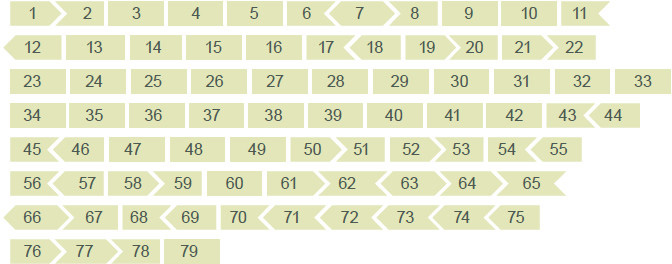
You may see the 79 exons represented in this type of graphic, which shows how the exons connect to each other. If there is a missing piece within the dystrophin gene (deletion) or an extra piece (duplication), your body can have difficulty making dystrophin.
What are the most common variant in the dystrophin gene?
Thousands of different variants have been reported in the dystrophin gene. This table shows the different types of genetic variants that can happen in the dystrophin gene and how common the different genetic variants are in people with Duchenne and Becker.
| Type of genetic variants | How often variant causes Duchenne | How often variant causes Becker |
|---|---|---|
| Large deletions | 60-70% of cases | 80-85% of cases |
| Large duplications | 10% of cases | 5-10% of cases |
| Point mutations and other small changes (including ‘nonsense’ variants) | 15-30% of cases | 10-15% of cases |
As the table shows, most cases of Duchenne and Becker are caused by large deletions. Continue reading for a brief explanation of each type of genetic variant:
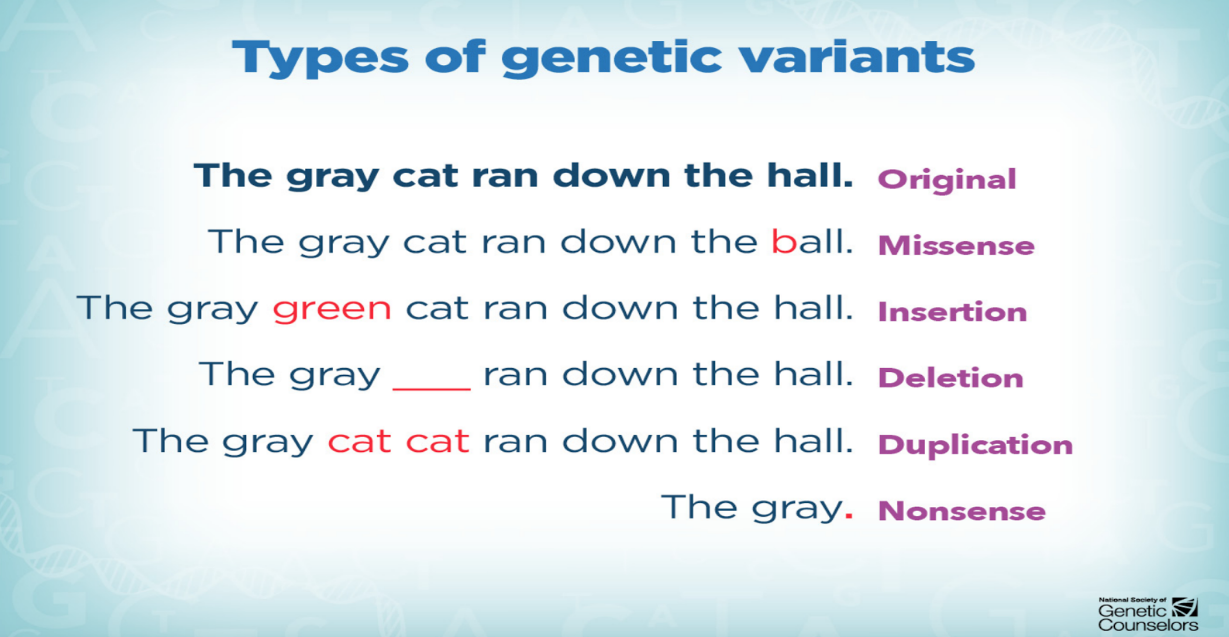
- Deletions occur when pieces of the gene are missing. For Duchenne and Becker, deletions of a full exon or multiple exons are the most common type of genetic variant. Since there are a total of 79 exons in the dystrophin gene, there are many different deletions that can occur. However, there are certain areas of the gene that are more likely to have a deletion, and these areas are called “hot spots”. Exons 44-55 are a hot spot region for deletions. If you know your/your child’s variant is an exon deletion, our educational Exon Deletion Tool can help you understand if you/your child may be a candidate for an exon skipping therapy.
- Duplications occur when pieces of the gene are doubled. This can also happen with one or more whole exons within the gene. Duplications are not as common as deletions. Like deletions, duplications can occur throughout all 79 exons of the dystrophin gene.
- Point mutations are smaller changes that affect just a single letter in the DNA code, instead of an entire exon. These variants can be tiny deletions, duplications, or other changes. One of the most common point mutations is called a nonsense variant. Nonsense variants create a premature stop, which tells the body to stop reading the gene too early and results in little or no dystrophin protein being made.
What is the difference between in-frame and out-of-frame variants?
If you or your child has a deletion, you have probably heard the terms in-frame and out-of-frame. The “reading frame rule” is sometimes used to describe how these types of variants typically affect the body.
In-Frame
A deletion is in-frame if the reading frame of the gene is preserved and not disrupted, so some dystrophin protein can be made. The protein may be shorter than normal, but it is still functional. In-frame deletions typically result in Becker muscular dystrophy because there is some dystrophin protein present in the cells.
Out-of-Frame
A deletion is out-of-frame if the reading frame is disrupted, so that no dystrophin protein can be made. Out-of-frame deletions typically result in Duchenne muscular dystrophy, because there is no dystrophin protein present in the cells.
It is important to remember that this reading frame rule is not perfect. There are some out-of-frame deletions that cause Becker and some in-frame deletions that cause Duchenne. Sometimes a child’s diagnosis will be “intermediate or unclear” until the child grows older and their progression can be observed. Please speak with your doctor or genetic counselor if you have questions.
Can you predict progression based on genetic variant?
Duchenne progresses differently for every person, thus every person living with Duchenne will have their own symptoms no matter their genetic variant. Even siblings with the same variant may have a very different progression of symptoms. The progression of symptoms through this disease is on a spectrum, from late onset/very mild symptoms to early onset/severe symptoms.
Genotype vs. Phenotype
Genotype is a person’s genetic makeup. In Duchenne, it is the genetic variant that affects the production of dystrophin. Phenotype is how the body chooses to express a specific genotype. In Duchenne, it is the symptoms of how the body is progressing through this diagnosis. It is possible to have a genotype most often associated with Becker, but to have a phenotype more typical of Duchenne, and vice versa.
How do you determine what genetic variant you have?
Genetic testing is now the gold standard for the diagnosis of Duchenne and Becker. Genetic testing will determine what type of genetic variant is present, as well as the specific details of the variant. Genetic testing can also predict if someone is more likely to have Duchenne or Becker. However, as stated previously, predictions of severity based on the genetic variant are not perfect and a person’s symptoms and disease progression must also be considered. Therefore, families must consult with their doctor for their final diagnosis.
PPMD is able to provide free genetic testing to help eligible individuals determine their genetic variant through our Decode Duchenne genetic testing program. The application and testing process is fast and easy. Learn more about PPMD’s free genetic testing program.
Why is it so important to know your genetic variant?
There are three reasons why it is imperative to know your genetic variant:
- To confirm your diagnosis: There are other types of muscular dystrophy that can imitate Duchenne or Becker. Genetic testing will confirm if you have a variant in the DMD gene or a disease-causing variant in a different gene.
- To enable testing of family members: Once the variant in a family is known, then other family members can be tested to determine if they are carriers of the gene variant and/or at risk to develop muscular dystrophy.
- To determine what variant-specific therapies may benefit you: Many therapies in development and/or approved for Duchenne are variant-specific, meaning they will only benefit individuals with certain variants. You must know your genetic variant in order to participate in a clinical trial for a variant-specific therapy or access variant-specific treatment once it is approved.