
 by: Parent Project Muscular Dystrophy
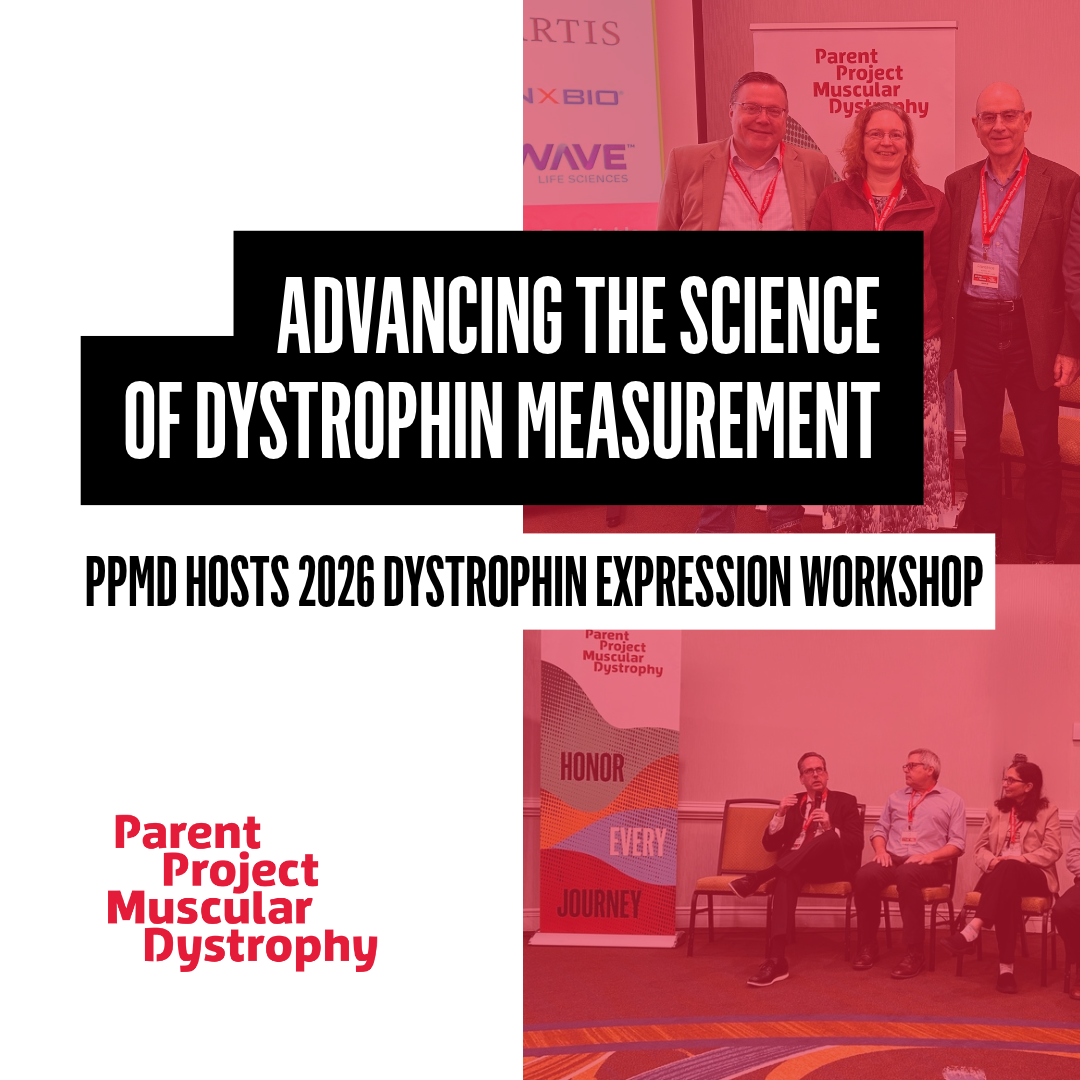
On November 12–13, PPMD convened scientists, clinicians, industry experts, caregivers, and representatives from the Food and Drug Administration (FDA), and the Centers for Disease Control and Prevention (CDC) for the 2026 Dystrophin Expression Workshop: Harmonization of Methodologies and Communication of Readouts in Silver Spring, Maryland.
The two-day workshop focused on an increasingly important question for the Duchenne community: How do we accurately measure, interpret, and communicate dystrophin expression as new therapeutic approaches continue to advance?
As the Duchenne treatment landscape evolves, the ability to consistently measure dystrophin and understand what those measurements mean is critical. Different laboratories and research groups may use different methodologies, analytical approaches, and reporting standards. These differences can make it challenging to compare results across studies, understand the implications of dystrophin production, and communicate findings to families and the broader community. Establishing greater consistency and shared understanding is an important step toward advancing research and supporting future therapeutic development.
Bringing Together Scientific Expertise and Community Perspectives
The meeting began with the perspectives of the people most directly impacted by Duchenne, who face the difficulty of interpreting data on dystrophin restoration – caregivers and clinicians. Dystrophin expression can be reported in a number of different ways – how much protein in the muscle, where it’s located, how well it’s functioning with other proteins, what kind of dystrophin was restored – all factors that convey important information but can be challenging to understand. These discussions reinforced the importance of ensuring that scientific advances are meaningful and understandable to the families who are navigating Duchenne every day. How dystrophin results are communicated matters, particularly as families are increasingly asked to interpret complex scientific information about potential treatments.
Understanding How Dystrophin Is Measured
A significant portion of the workshop focused on the methodologies currently used to assess dystrophin expression, including Western blot, capillary immunoassay, mass spectrometry, and transcript quantification.
Experts explored the strengths and limitations of these approaches, including challenges with image analysis, normalization, and interpreting RNA measurements in relation to actual dystrophin protein expression. Presentations also highlighted advances in mass spectrometry and the importance of understanding how different analytical approaches may influence reported results.
A central theme was the need for greater consistency in how dystrophin is measured and how results are presented. Without greater harmonization, differences in laboratory methods and interpretation can complicate comparisons across clinical trials and research studies.
For families, these distinctions matter because dystrophin results are often part of the conversation about how a treatment is performing. Dystrophin expression can be measured much earlier than functional changes so families often only have this data available to make treatment or clinical trial decisions. Greater consistency in measurement and reporting can help families, clinicians, researchers, and regulators better understand what emerging therapy results actually tell us.
Understanding the Science Behind Different Duchenne Variants
The workshop also examined the clinical and scientific implications of different variants and the dystrophin proteins they may produce.
Presentations explored functional differences between dystrophin products, variability in protein stability, structural rearrangements of the gene, and the relationship between protein and transcript measurements in large patient cohorts.
These discussions are particularly important as the field continues to develop and evaluate therapies targeting different genetic variants. Understanding not only whether dystrophin is produced, but also the characteristics and potential functionality of the resulting protein, is an important part of evaluating therapeutic approaches.
Working Toward Greater Harmonization and Better Communication
Representatives from the FDA, including participants from both the Center for Drug Evaluation and Research (CDER) and the Center for Biologics Evaluation and Research (CBER), joined for discussions about current methodologies, standard operating procedures, and opportunities for harmonization.
The group explored how different methodologies are being used today, where greater consistency may be possible, and what gaps remain. Additional discussions focused on recommendations for communicating dystrophin expression results to the Duchenne community.
The participation of representatives across HHS, FDA, and CDC further underscored the importance of bringing together scientists, clinicians, industry experts, caregivers, and federal representatives to advance a shared understanding of dystrophin measurement and its implications.
The goal is not simply to establish consistency for the sake of consistency. It is to ensure that the scientific community has reliable, meaningful ways to generate and interpret data that can inform research, therapeutic development, regulatory discussions, and ultimately the Duchenne community.
Continuing the Work Together
PPMD’s 2026 Dystrophin Expression Workshop was an opportunity to bring together scientists, clinicians, industry experts, caregivers, and federal representatives to address an important area of ongoing scientific development.
Creating greater harmonization of methodologies, clearer communication of results, and continued collaboration across stakeholders will be essential to ensuring that dystrophin expression data are interpreted consistently and meaningfully.
For PPMD, convening these conversations is part of our continued commitment to advancing Duchenne research and ensuring that the needs and perspectives of our community remain central to scientific and therapeutic development. In lieu of functional data, families often still need to make decisions surrounding approved and investigational products, and we want to ensure that the data they do have is as valuable and empowering as possible.
Looking ahead, we plan to synthesize and disseminate the findings and key takeaways from this workshop, with the goal of publishing a comprehensive summary of the discussions, identified gaps, and opportunities for continued collaboration in 2027. We hope this work will serve as a resource for the broader Duchenne research, clinical, regulatory, and patient communities, helping to inform ongoing efforts to improve the measurement, interpretation, and communication of dystrophin expression data.
We are grateful to all of the speakers and participants, including scientists, clinicians, industry experts, caregivers, and representatives from FDA and CDC, who contributed their expertise and perspectives over these two days. We look forward to continuing this important work together.