
 by: Parent Project Muscular Dystrophy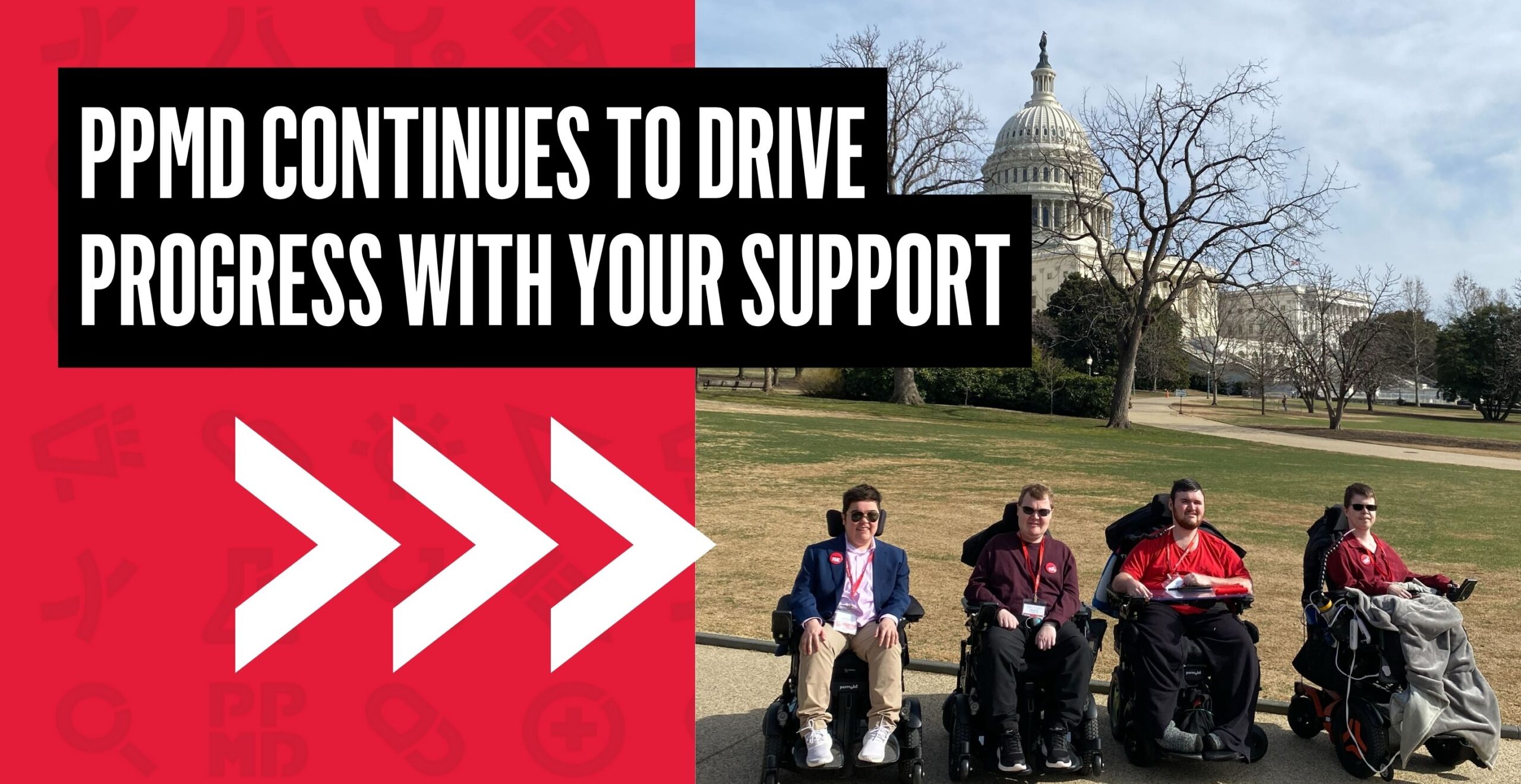
PPMD is committed to every future, working toward the day when every single family has options for, and access to, therapies and specialized care.
In 2025, thanks to your support, families are receiving earlier diagnoses, care is evolving as the natural history of Duchenne changes, research is moving forward, and the bonds between families, advocates, and experts continue to grow. We are pleased to share the following updates to you on our work in 2025.
Below you will find a snapshot of PPMD’s investment and program highlights so far this year. While the work that lies ahead remains plentiful, our accomplishments remain unrivaled – thanks to each of you. PPMD Donor Report 2025
RESEARCH
PPMD continues to proactively address challenges in gene therapy research and treatments through our Gene Therapy Initiative. In 2025 we:
- Co-funded a clinical trial exploring the use of the drug efgartigimod (Vyvgart) to reduce anti-AAV antibodies in Duchenne patients. This one-year study, led by Dr. Barry Byrne at the University of Florida, aims to determine if an immune-modulating therapy can enable more people to receive gene therapy safely, including those who currently have antibodies from prior infections or trials. Learn more here.
- Supplemented Wellstone Awards to the University of Florida Myology Institute and Northwestern University. PPMD’s support to Northwestern University will support continued training of research and clinical fellows, cardiologist Dr. Fullenkamp. The University of Florida will focus their research efforts on enhancing our understanding of gene therapy through pre-clinical studies and muscle imaging. The goal is to better understand combination therapy along with gene therapy and elucidate the physiological changes of a Duchenne patient who has received a gene therapy. Learn more about the history of PPMD’s support of the Wellstone Muscular Dystrophy Research Network here.
PPMD also continues to lead the way in Patient Preference and Qualitative research in Duchenne and Becker. In 2025 we:
- Collaborated with partners and researchers to publish a joint qualitative study examining barriers to trial participation among Hispanic/Latinx families, published in Orphanet Journal of Rare Diseases, providing insights that will help ensure that clinical research is more inclusive, representative, and accessible to all.
- Launched the Stability Study, a Patient Preference study focused on understanding what “stability” means to families living with Duchenne. These insights will be shared with regulators, clinicians, and industry leaders so that future therapies are evaluated in ways that reflect what is most impactful to those living with Duchenne. This study was shaped directly by families. During our 2024 Advocacy Conference Town Hall, parents and caregivers made it clear that stability should be recognized as a meaningful treatment benefit. Their input guided the questions we are asking and how the study was designed. Recruitment is open.
We also continued work under the auspices of our “Brain Project”. In 2025, we:
- Issued two awards to researchers working on the Brain Involvement In Dystrophinopathies (BIND) project based in the EU. The focus of the BIND project has been to help elucidate the role of dystrophin in the brain and uncover the mechanisms by which dystrophin isoforms, or their absence plays in development.
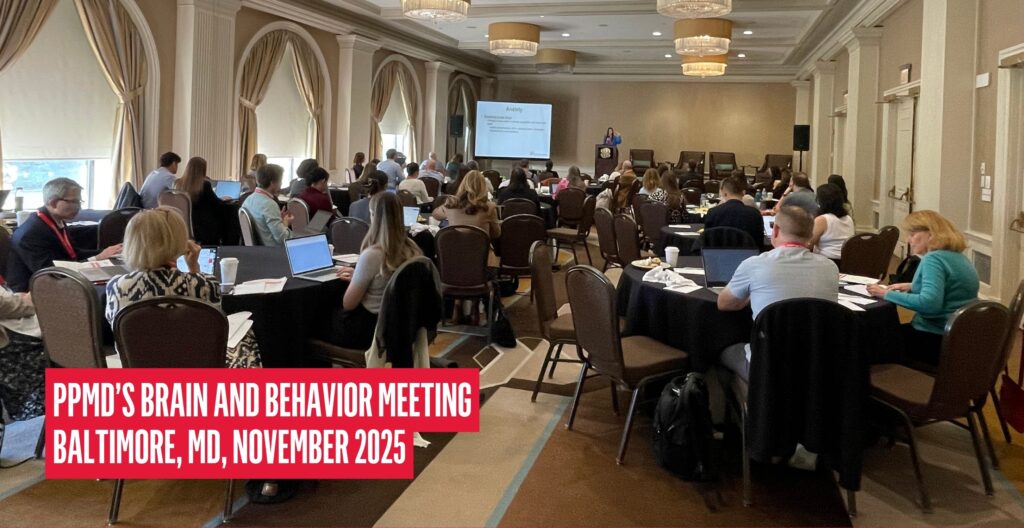
- Hosted a workshop on the Brain and Behavior in Dystrophinopathy, a two-day meeting led by co-chairs Molly Colvin (Harvard University-Massachusetts General Hospital), Natalie Truba (Nationwide Children’s Hospital, CDCC) and Francesco Muntoni (University College London-Great Ormond Street Children’s Hospital). This workshop delved into key areas in the care of individuals living with dystrophinopathy, including the role of steroids on behavior, new tools to facilitate increased access to behavior screening and treatment, the role of behavior in clinical trial participation, and deep discussion on medication- and non-medication based interventions to support patients in their families.
- As part of this meeting, PPMD also announced a new grant to Natalie Truba to continue her work alongside collaborator Molly Colvin to initiate validation studies of the BELS (Behavioral, Emotional, Learning, Social) Tool, which received early funding from PPMD for development and subsequent pilot testing at Arkansas Children’s Hospital, a Certified Duchenne Care Center. The BELS aims to improve access to screening of behavioral and psychological symptoms, facilitating faster recognition of risk factors and symptoms and quicker referral to appropriate providers who can create meaningful plans of care.
THE DUCHENNE REGISTRY
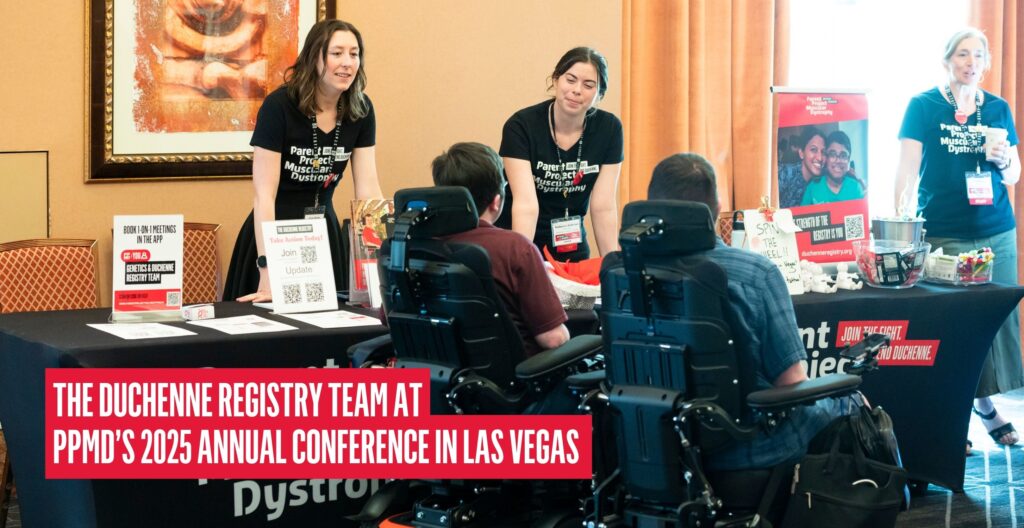
Thanks to your engagement, The Duchenne Registry remains the largest patient-reported outcomes registry for Duchenne, Becker and carrier females. Over 6,000 people from more than 125 countries have joined, contributing 17+ years of longitudinal data and helping with 175+ clinical studies and trial recruitments.
In 2025, PPMD’s Registry team Initiated Three studies:
- An analysis of the impact of age of diagnosis on the age of steroid initiation, initial findings were presented at PPMD’s Newborn Screening Symposium in early March.
- Impact of diagnosis on care, which was accepted as a poster presentation at the MDA Conference in March.
- An analysis of the distribution of different variant types around the world that was presented as a poster session at the World Muscle Society Congress in October. This work was done with our international partners at TREAT-NMD.
We also created a new group called Registry Champions, a small group of individuals who are actively engaged with the Registry and are helping to spread the word about the importance of participation. A highlight of this effort was a community webinar we hosted in May.
We continue to make progress on our Electronic Health Record (EHR) Study, with real world data from patients flowing into the Duchenne Outcomes Research Interchange. The EHR Study represents the future of data sharing using a novel approach to aggregate data from consented patients in an automated way, thus reducing burden on clinic teams and patients themselves.
Now in its 12th year, Decode Duchenne continues to provide access to critical genetic testing for families living with Duchenne and Becker. More than 1,850 individuals have been tested through our diagnostic arm, and an additional 1,800 have been tested through our familial variant (carrier) arm. A genetic diagnosis can end years of uncertainty, open doors to treatment, and bring families renewed hope.
ADVOCACY
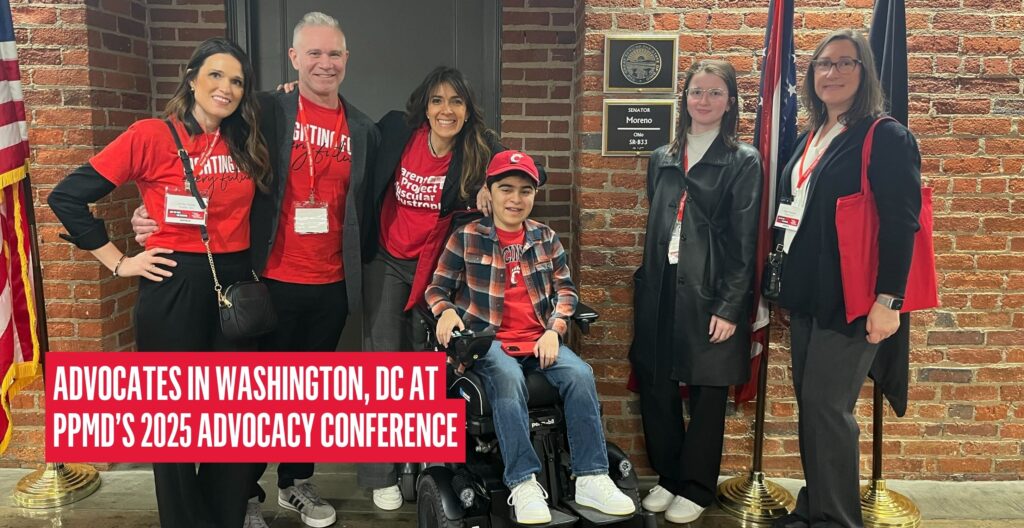
2025 has been an historic year for Duchenne advocacy, one marked by both hard-fought victories and unprecedented challenges. Through it all, the power of our community’s voice has never been more evident.
- The 2025 Advocacy Conference in March brought more than 130 advocates from 30 states to Washington, D.C. Advocates met with their Members of Congress, sharing firsthand the urgency of Duchenne policy priorities with policymakers. These meetings played a pivotal role in securing FY2025 federal Duchenne funding and appropriations language, including an increase from $10 million to $12.5 million for our Department of Defense Congressionally Directed Medical Research Program (CDMRP) and $8 million in funding to the Centers for Disease Control & Prevention (CDC).
- We continue to collaborate closely with the CDC to advance critical Duchenne initiatives. Through the Muscular Dystrophy Surveillance, Tracking, and Research Network (MD STARnet), we are working to strengthen data collection, improve the accuracy of diagnosis and coding, and ensure that public health resources reflect the realities of living with Duchenne. These efforts provide the foundation for better standards of care, help track long-term outcomes, and inform policy decisions that shape access and services nationwide.
NEWBORN SCREENING
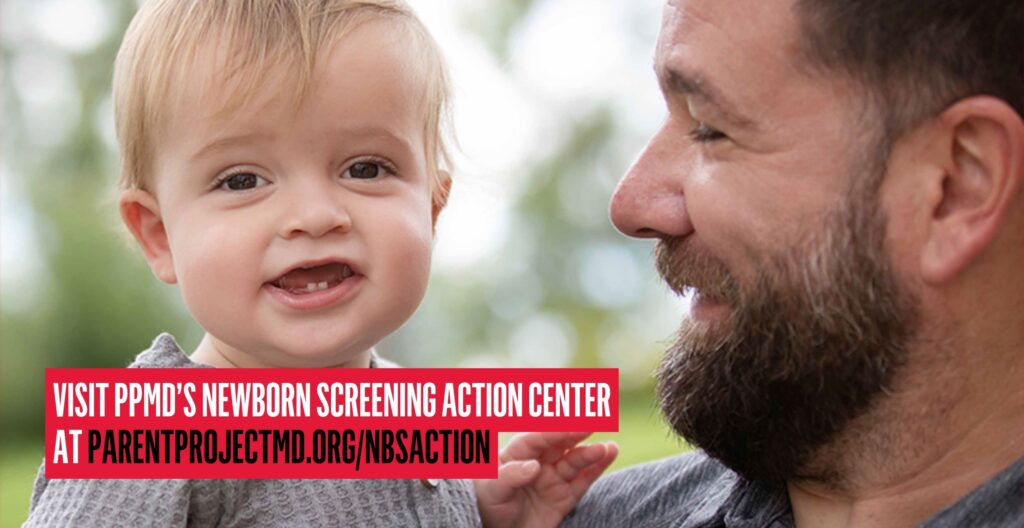
For more than a decade, PPMD has worked tirelessly alongside our community towards newborn screening for Duchenne at federal and local levels. State by state, PPMD is fully committed to this effort, giving every child the opportunity to benefit from early diagnosis.
- In May, Texas Governor Greg Abbott signed Senate Bill 1044 into law, officially committing to adding Duchenne muscular dystrophy to Texas’s newborn screening panel. Days later, Florida’s Governor Ron DeSantis signed Florida’s Duchenne newborn screening legislation (HB 1089/SB 524) into policy. Both states signed unfunded mandates, so advocacy will continue to ensure these programs start promptly.
- In June, Arizona’s Governor Katie Hobbs signed the bipartisan state budget including the Duchenne newborn screening Senate Bill 1076.
- Ohio and Minnesota have fully implemented Duchenne screening, while Massachusetts, New York, and Illinois also have approved programs that are not yet active due to budget constraints.
In preparation for newborn screening in every state, PPMD has been proactively working to ensure that babies diagnosed with Duchenne have access to multidisciplinary care at diagnosis.
- In March, we hosted the Duchenne Early Intervention Symposium to present evidence about the impact of early treatment on outcomes in Duchenne.
- On December 1st, we will also host the Early Diagnosis and Care for Duchenne Masterclass, a collaboration with TREAT-NMD to convene pediatric specialists, physical therapists, genetic counselors, and researchers to discuss optimal care strategies for babies and toddlers with Duchenne.
- Work on Baby Duchenne, the project led by Dr. Bo Hoon Lee at the University of Rochester to support the initial development of a clinical research network designed to develop natural history and guidance for care for babies identified through newborn screening also continues. With PPMD’s initial $250,000 grant awarded in 2024, Dr. Lee created a framework on which to submit an application for additional funding through the Congressionally Directed Medical Research Program (CDMRP), and this year she was awarded a grant to expand the program. With these resources, clinicians can be ready at diagnosis with an informed plan for 0–3 year-old clinical care.
Responding to Federal Changes:
- In April, the U.S. Department of Health and Human Services dissolved the federal Advisory Committee (ACHDNC) that was reviewing Duchenne’s nomination to the national Recommended Uniform Screening Panel (RUSP). While this news was concerning – the ACHDNC had been the guiding body for newborn screening for over 20 years and was set to vote on recommending Duchenne to the RUSP in May – PPMD immediately pivoted to forge a new path forward. Our team sprang into collaboration with leading newborn screening experts, partners, and policymakers to explore ways to keep the nomination progressing. Through our combined efforts, the Health Resources and Services Administration (HRSA) agreed to allow the completion of the Evidence Review Report.
- We joined members of the nomination’s technical expert panel to present additional data at EveryLife Foundation’s Newborn Screening Evidence Review workshop on September 12th.
- HRSA recently closed an open comment period for feedback regarding Duchenne newborn screening, and we anticipate a federal decision for adding Duchenne to the Recommended Uniform Screening Panel at any time.
CARE
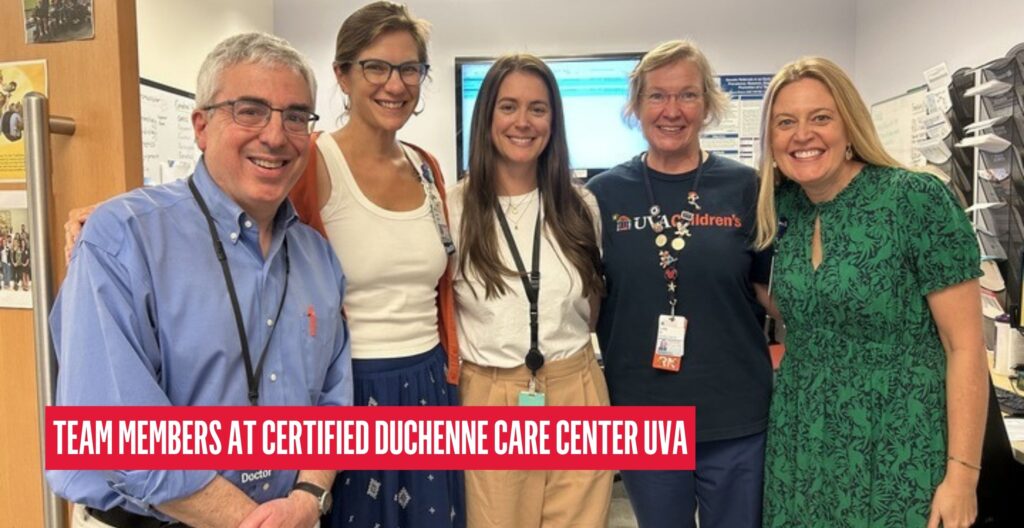
- PPMD kicked off 2025 by bringing the global Duchenne care community together at our sixth annual Duchenne Healthcare Professionals Summit, convening over 360 experts – clinicians from 50+ centers, researchers, industry partners, and representatives from the FDA, NIH, CDC, and abroad – in one room to advance dystrophinopathy care. Attendees tackled pressing topics including sequential therapies, lessons learned in gene therapy, early intervention through newborn screening, and the growing needs of adult patients.
- At the conclusion of Summit 2025, we launched dystrophinopathy working groups to bring together experts across the field to address emerging challenges. At next year’s Summit, these groups will reconvene to share progress and work toward consensus on modern Duchenne and Becker care to meet the current needs of patients and families.
- PPMD’s Certified Duchenne Care Center (CDCC) network continues to expand, bringing excellence in care to more families. In June, we announced the certification of Children’s Hospital of Philadelphia (CHOP), marking our 39th CDCC. CHOP is also the first center to earn PPMD’s new Clinical Research Designation. The Clinical Research Designation provides visibility into which CDCCs provide outstanding leadership in Duchenne clinical trials and research as well as world-class multidisciplinary care.
- This year, in partnership with the OPTIMIZE-DMD Consortium spearheaded by Drs. Leanne Ward (Children’s Hospital of Eastern Ontario) and David Weber (CHOP, a CDCC), PPMD released an updated version of the PJ Nicholoff Steroid Protocol, shaped by a decade of experience from families and clinicians. The new guidance strengthens emergency stress dosing, ensures safer tapering and transitions between steroids, and adds important updates on newer treatments like Agamree (vamorolone).
- In April, PPMD and PPMD Italy co-hosted a Cardiopulmonary workshop in Rome. The workshop, which included a multi-disciplinary audience from across the US and Italy, aimed to both understand the current landscape of cardiac and pulmonary care against a global background, with a goal of working toward consensus recommendations for cardiopulmonary care in dystrophinopathy throughout the lifespan. A meeting report is in progress and will be shared with the community via publication in a peer-reviewed journal in the coming months.
- In June, we partnered with key physical therapy leaders in the dystrophinopathy field in the creation of a two-day workshop for physical and occupational therapists to provide education on emerging evidence on the role of exercise in individuals living with both Duchenne and Becker muscular dystrophy. Led by physical therapists Claudia Senesac (University of Florida, retired), Donovan Lott (University of Florida), Tina Duong (Stanford University) and exercise physiologist Tanja Taivassalo (University of Florida), workshop participants learned not only about the latest research on exercise, but also how to create safe exercise plans for their patients. A workshop report is in preparation, and additional workstreams are in process as a direct result of this meeting.
CONFERENCE AND COMMUNITY
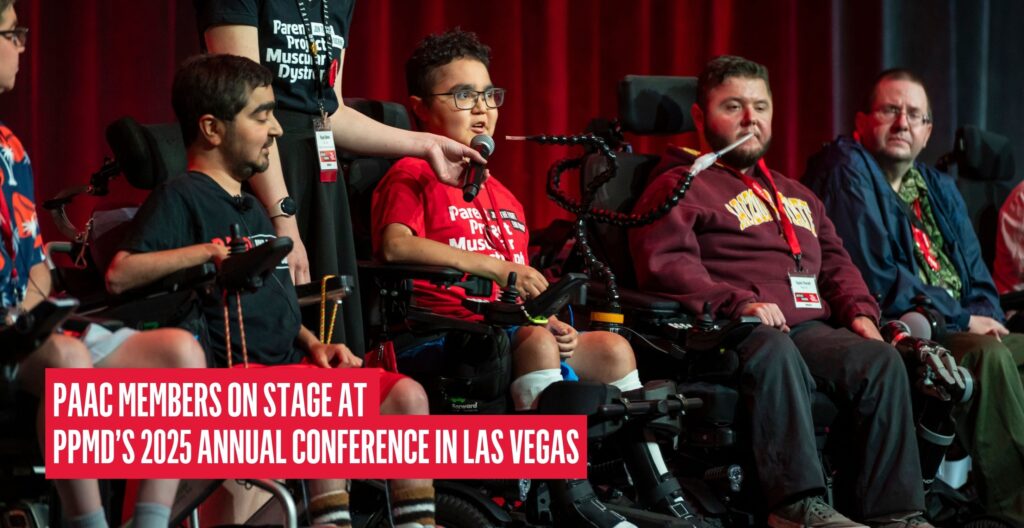
PPMD’s Annual Conference, held in June in Las Vegas brought together over 1,200 families, researchers, clinicians, and industry partners from around the world for three days of informative and interactive sessions featuring the latest in research, clinical trials, approved and emerging therapies, care initiatives, quality of life issues, and more.
- We heard cutting-edge research updates straight from scientists, engaged in frank discussions about daily care and mental health, and participated in hands-on workshops.
- Teens and adults enjoyed a dedicated track led by our PAAC, sharing candid peer perspectives on navigating college, careers, and independence.
- Families new to a Duchenne diagnosis connected with the community, finding hope and guidance for the road ahead.
- PPMD’s 2026 Annual Conference will be held June 25–27, 2026 in Orlando, at Disney’s Coronado Springs Resort.
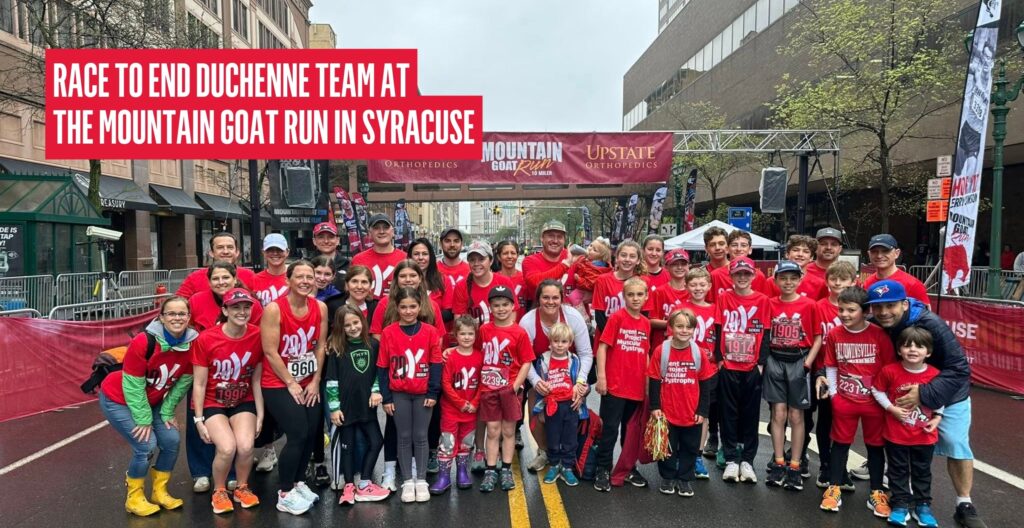
Our Race to End Duchenne program celebrated its 20th year.
- We kicked off the celebration in January at the Walt Disney World Marathon Weekend, where an amazing 185 team members (runners, walkers, and rollers) donned Race to End Duchenne shirts and hit the pavement together.
- Our racers have participated in major events from coast to coast – including the Chevron Houston Marathon, the United Airlines NYC Half, the TD Five Boro Bike Tour and the Bank of America Chicago Marathon – all while raising awareness and dollars to advance our mission. We also added our first international marathon – the 2026 Tokyo Marathon – to our race calendar, an exciting expansion of the program.
PPMD’s Adult Advisory Committee (PAAC) continues to empower adults living with Duchenne and Becker through advocacy, education, and community engagement.
- At PPMD’s Annual Conference in June, over 80 people with Duchenne and Becker participated in the Teen & Adult Track, led by the PAAC, which featured workshops on travel, technology, life planning, mental health, and relationships, alongside a vibrant resource fair.
- A highlight was the unveiling of a low-cost robotic arm developed in partnership with Virginia Tech to assist with everyday tasks—now funded for broader development thanks to PAAC feedback and support.
The PPMD Connect program continues to thrive, providing local support and social opportunities in communities across the country. In addition to our geographic groups, we have seen wonderful growth in our specialized Connect groups for Siblings, Grandparents, Dads and Carriers, providing continuing opportunities for these groups to meet virtually and discuss topics important to their unique journeys.
Our Do-It-Yourself (DIY) fundraising program continues to grow, and is a great way for families to take action and raise funds while bringing awareness of Duchenne and Becker to their own communities through fun and interactive events.
Some highlights from the year include:
- August Blues, a fishing tournament in Nantucket
- Mitchell’s Run Through Rockford, our longest-running DIY fundraising event honoring Mitchell Petersen
- Rev It Up 5K in Ohio
- Singing Badly for a Good Cause, a family-friendly karaoke event in Illinois
- 20th annual Sam’s Night in Dallas, which raised more than $1.5 million, becoming the highest fundraising event in PPMD’s 30+ year history
This year has shown us just how much progress is possible when we work together. From research breakthroughs to advances in care and advocacy, every success has been made possible because of you. Families are receiving answers sooner, children are starting therapies earlier, and the Duchenne community is stronger than ever. Yet there is still more to do. Many families are still waiting for options, and the road to therapies requires continued investment and commitment. We are deeply grateful for your generosity, your voice, and your partnership.